Futurewood
 Louis Major
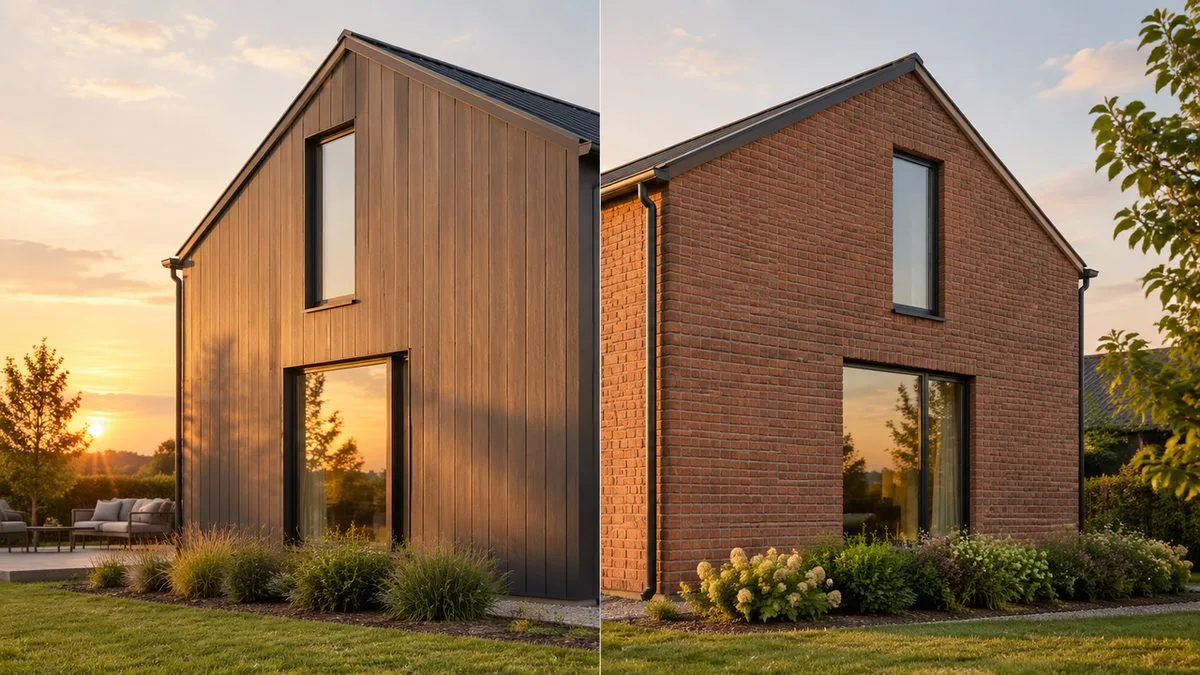
Cladding a house is cheaper than bricking it, both to build and to own. On an average three or four bedroom home, cladding typically saves $15,000 to $40,000 at construction stage, because it needs lighter footings, faster labour, and no mortar curing time. Over the life of the house, that gap often gets wider, not smaller, once you factor in repointing, cracking repairs, and efflorescence treatments that brick homes eventually need.
I’ve quoted both wall types side by side for clients building new homes and renovating existing ones. The pattern is consistent. Brick wins on street appeal for some buyers. It rarely wins on cost. Here’s exactly where the money goes.
What does brick veneer actually cost compared to cladding?
Supplied and installed, brick veneer construction generally runs $250 to $400 per square metre once you include bricks, mortar, flashing, weep holes, and bricklayer labour. Composite cladding, including Futurewood Cladding, typically installs for $150 to $250 per square metre supplied and fitted, depending on profile and site access.
That difference comes from more than just the material. Brick is a trade-intensive job. A bricklayer lays roughly 400 to 600 bricks a day on a straightforward wall. Cladding goes up in boards or panels, covering far more wall area per labour hour. Less time on site means a lower labour bill, and that’s before you touch the materials themselves.
Why does brick cost more before a single brick is even laid?
This is the part most cost comparisons miss. Brick veneer is heavy. A single skin of brick veneer can weigh over 200kg per square metre. That load has to go somewhere, and it goes straight into the footings.
Builders need wider strip footings or a reinforced slab edge to carry masonry. I’ve seen quotes where the footing upgrade alone for brick veneer added $4,000 to $8,000 compared to a lightweight clad frame on the same block. One of my clients was building on a sloping block in outer Melbourne. Her engineer quoted an extra $6,500 in footing work purely to support brick veneer on two elevations. She switched to cladding on those walls and put the saving toward better glazing instead.
Lightweight composite material doesn’t carry that penalty. A timber or steel frame clad in a composite board adds very little load, so standard footings usually do the job. That’s a cost saving baked into the structure before the wall cladding itself is even priced.
Does brick save money over time through durability?
This is the argument I hear most often from brick suppliers, and it only tells half the story. Fired clay brick itself is tough. It doesn’t rot and it doesn’t need painting. But a brick veneer wall is not just brick. It’s brick plus mortar plus a cavity plus flashing plus weep holes, and every one of those components ages differently.
Mortar joint failure is the real cost driver in older brick homes. Mortar is softer than the brick it holds together, and it’s designed to wear first. After 15 to 25 years, depending on exposure, mortar joints start to crack, crumble, or let water through. Repointing a full house can cost anywhere from $8,000 to $20,000 depending on wall area and access. I’ve walked clients through quotes for exactly this on 1980s and 90s brick veneer homes, and the number always surprises them.
composite cladding doesn’t have mortar joints to fail. Futurewood Cladding is manufactured from a composite material that resists rot, doesn’t crack like mortar, and needs no recoating or repointing once it’s installed correctly. That’s the single biggest difference in a genuine cost–benefit analysis between the two wall types.
What about fiber cement boards as a middle option?
Fiber cement boards sits between brick and composite cladding on upfront cost, but it brings its own maintenance list. It needs painting every 7 to 10 years to stay weatherproof, and it’s prone to cracking at joints and corners if the substrate moves. I know this because a client of mine repainted a fiber cement clad extension twice in twelve years after hairline cracking let moisture in behind the paint film. That ongoing cost has to be added to any honest comparison, and it’s rarely included in the upfront quote.
Which option actually uses energy more efficiently?
Brick’s thermal mass gets a lot of credit for efficient energy use, and in the right climate, with the right orientation, that’s fair. Thick masonry absorbs heat during the day and releases it slowly at night, which can smooth out temperature swings in some inland climates.
But most Australian homes today are built to meet energy efficiency requirements under the building code through insulation, not wall mass. The NCC’s energy efficiency provisions are met with insulated frames, sarking, and sealed junctions, and that approach works identically whether the external layer is brick or composite cladding. A clad wall with a well-insulated frame cavity performs just as well on paper, often better, because there’s no thermal bridging through solid masonry ties.
In practice, the wall covering is rarely the deciding factor in a home’s energy rating. The frame, insulation, glazing, and sealing do that work. Don’t let a brick quote sell you thermal mass as a reason to ignore the extra $20,000 to $30,000 it costs to get there.
Does the building code treat clad and brick homes differently?
Both wall types have to meet the same National Construction Code requirements for weatherproofing, structural adequacy, and, where relevant, bushfire attack level compliance. Masonry veneer has long-established detailing rules around cavities, flashing, and weep holes to manage moisture. Composite cladding systems are assessed under their own compliance pathway, usually through a tested system with documented fixing, cavity, and flashing details specific to the product.
Neither option is harder to get compliant. What changes is who you need on site. Brick veneer needs a licensed bricklayer who understands cavity detailing. Cladding needs a carpenter or installer trained on that specific composite material’s fixing system. Get either one wrong and you’ll have water problems regardless of what the wall is made from. I always tell clients the biggest compliance risk isn’t the material, it’s an installer who hasn’t been trained on it.
So what’s the real value proposition over the life of the house?
Run the numbers over 20 years and the gap between brick and cladding doesn’t close, it opens up. Brick veneer costs more to build because of footing loads and labour-heavy construction. Then it asks for repointing, crack repair, and efflorescence treatment somewhere in its second or third decade. Fiber cement siding costs less to build than brick but adds recurring paint cycles that brick doesn’t need.
Composite cladding costs less to build than both and, once installed to spec, asks for nothing more than an occasional wash. That’s the value proposition in one sentence: lower cost going in, and no maintenance bill waiting for you ten or twenty years down the track. I’ve had clients call me after reading a glossy brick brochure promising a “maintenance-free” wall, only to find out that promise only covers the brick itself, not the mortar, the flashing, or the cavity behind it. Cladding doesn’t have that asterisk.
So which one is actually cheaper?
Cladding. On upfront construction cost, on footing and labour cost, and on lifetime maintenance cost. Brick still has a place where a client wants a specific masonry look and has the budget for it, and that’s a legitimate design choice. But if the question is purely cost, brick loses on every stage of the comparison, not just the sticker price at the yard.
Action points
- Ask any brick quote for the footing and slab engineering cost separately, not bundled into one figure. That’s where brick’s real cost gap shows up.
- Get a 20 year maintenance estimate alongside any brick or fiber cement siding quote, including repointing and repainting cycles.
- Check that any cladding installer is trained and certified on the specific composite material’s fixing system before signing off on the job.
- Compare composite cladding against brick on total cost of ownership, not just the supply and install price, before you commit to a wall type.