Futurewood

 Louis Major
Composite decking costs 30 to 70 percent more upfront than treated timber but typically pays for itself within eight to twelve years through eliminated maintenance and replacement costs. The real question isn’t whether composite material costs more to buy. It does. The question is whether you’ll spend less money over the deck’s lifetime.
When I built my first deck fifteen years ago, I chose treated pine because the $8,000 quote for composite material seemed absurd compared to the $3,500 timber option. I’ve now spent over $6,000 maintaining that timber deck. I know this because I kept every receipt thinking I was being smart with my money. I wasn’t.
What does composite material actually cost compared to wood?
A 20-square-metre composite deck costs between $6,000 and $12,000 installed. The same timber deck costs $3,500 to $7,000. That gap narrows when you factor in the substructure, because both options need similar framing.
The price difference sits almost entirely in the decking boards themselves. Composite material runs $80 to $150 per square metre. Treated pine costs $30 to $60 per square metre. Hardwood sits between them at $50 to $100.
What changes the cost within composite options is the formula. Boards made from wood fibre and polyethylene cost less than boards using polypropylene. The polymer type affects heat retention, stain resistance, and how long the colour lasts. Cheaper composite can fade or warp faster than quality composite, which defeats the purpose of choosing it. Understanding the newest decking trends helps you choose materials that hold value longer.
One of my clients installed budget composite four years ago because it was only slightly more than treated timber. The boards faded to grey within eighteen months and started cupping along the edges. She paid composite prices but got timber problems.
How long does each material actually last before you replace it?
Quality composite decking lasts 25 to 30 years before you need replacement. Treated timber lasts 10 to 15 years with proper maintenance. Hardwood can reach 20 to 25 years if you stay on top of it.
The lifespan numbers assume you do the work. Timber requires oiling or staining every one to two years. Skip it and the wood preservation fails. Water gets in, the timber splits, and insect damage accelerates. I’ve seen decks deteriorate to unsafe in under eight years when owners ignored maintenance.
Composite material doesn’t rot. The plastic component protects the wood fibre core from moisture. Insects can’t eat it. You wash it with soap and water maybe twice a year. That’s the maintenance.
The failure mode differs too. Timber degrades gradually. You can see it coming and patch sections. composite decking either works or it doesn’t. When cheaper composite fails, it’s usually warping or fading, which means replacing boards. Quality composite just sits there for decades.
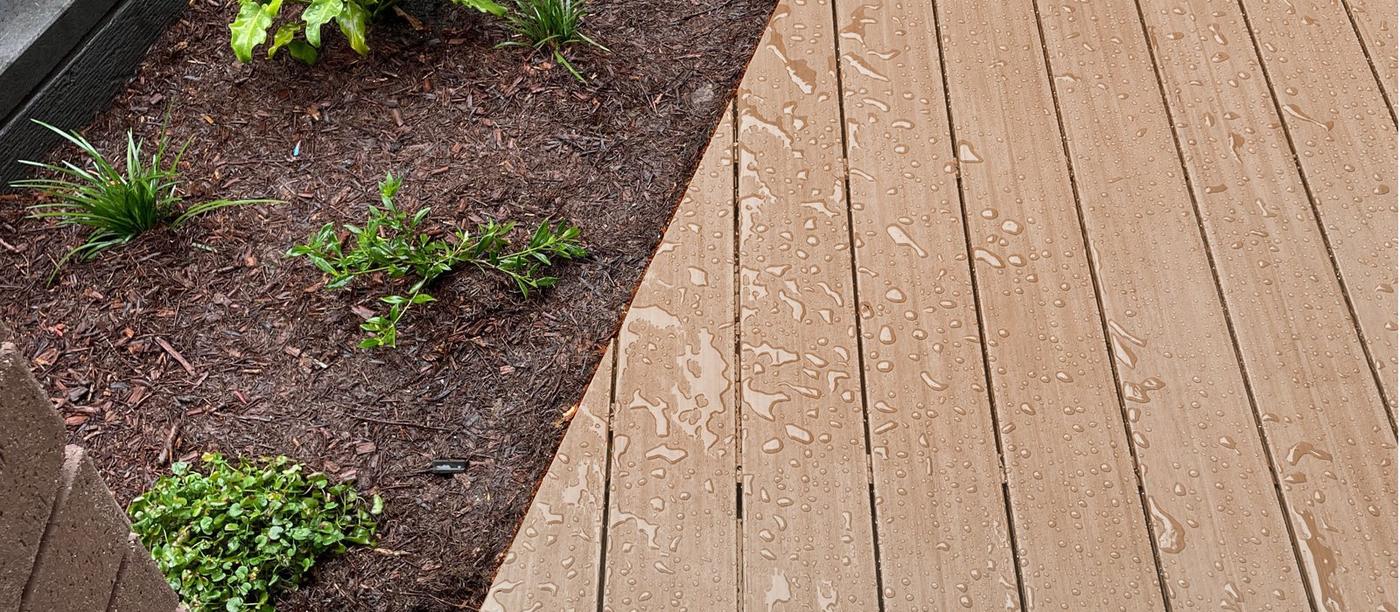
CleverDeck® composite decking
The look of timber. Up to twice the lifespan.
- No oiling
- No rot
- No fading
What hidden costs change the actual comparison?
Timber maintenance costs $400 to $800 per year when you hire someone. Over fifteen years, that’s $6,000 to $12,000. Do it yourself and you’re still buying materials plus your weekends.
I remember when one of my clients calculated her timber deck cost. She paid $5,000 to install it. After seven years of annual oiling at $600 each time, she’d spent $9,200 total. Her neighbour installed composite for $8,500 and spent $0 on maintenance. Same deck size.
Wood also needs earlier replacement. If you build a timber deck at $5,000 and replace it at year 12, you’ve spent $10,000 in capital costs alone. The composite deck you paid $8,500 for is still going strong at year 12. At year 24, you’ve replaced the timber twice for $15,000 total while composite is just hitting mid-life.
Water damage around the substructure matters too. Timber decking can let water through gaps, which affects the joists underneath. Composite boards often have tighter installation tolerances and better water shedding. This happened to my client who discovered rotted joists under her seven-year-old timber deck. The decking looked fine. The frame underneath needed $3,000 in repairs.
Does climate affect the cost difference?
Australian sun destroys timber faster than composite. UV breaks down wood preservation chemicals within months of application. You see silvering and surface checking almost immediately in Queensland and Western Australia.
Composite timber darkens slightly in direct sun but doesn’t degrade structurally. The polymer shell takes the UV hit instead of the wood fibre core. In my experience working across Brisbane and Sydney, composite decks look nearly identical at year five compared to installation. Timber decks at year five look like they need serious help.
Coastal properties accelerate timber rot. Salt air plus moisture means you’re oiling twice a year minimum, and the timber still deteriorates faster. Composite handles coastal conditions without extra maintenance. This is just based on what happened to my client in Wollongong, whose hardwood deck failed at year nine despite religious maintenance. The salt won.
When does timber make more financial sense?
Timber works better financially if you’ll sell the property within five years. You haven’t hit the major maintenance cycle yet, and the upfront savings stay in your pocket.
Small decks under 10 square metres also favour timber. The absolute dollar difference is small enough that maintenance costs take longer to catch up. A 6-square-metre balcony might cost $1,800 in timber versus $3,200 in composite. That $1,400 difference takes years to justify through avoided maintenance.
If you genuinely enjoy deck maintenance as a hobby, timber costs less. Some people like the ritual of oiling and the smell of fresh wood. The time isn’t wasted for them because they want to do it anyway.
Budget constraints matter too. If you can’t finance the larger upfront cost, timber gets you a deck now instead of waiting years to save the difference. A maintained timber deck beats no deck.
Planning the size of your deck?
Get an instant decking estimate online, or talk through boards and framing with our team.
What do the warranty terms actually mean for cost?
Quality composite carries 25-year structural warranties and 10 to 15-year stain and fade warranties. Timber has no warranty beyond the initial wood preservation treatment, which typically covers 15 years against rot but requires you to maintain the finish.
The warranty gap represents transferred risk. With timber, you own all the maintenance risk and the replacement risk. With composite, the manufacturer owns structural failure risk and shares appearance risk for the warranty period.
When I tried this with clients, the warranty calculation changes behaviour. Knowing the deck is covered for 25 years removes the anxiety about whether you’re maintaining it correctly. One of my clients said she stopped worrying about her deck entirely after switching from timber to composite. The mental cost of managing timber maintenance was higher than she realized.
How does resale value factor into the cost equation?
A well-maintained composite deck adds more to property value than a timber deck of the same age. Buyers see composite as a solved problem and timber as future work.
Real estate agents in my area consistently tell me that composite decking is a selling point they can list. Timber decking is just expected. The difference shows up in days on market rather than asking price, but faster sales have real dollar value.
This happened when I helped a client prepare a property for sale. We replaced a shabby timber deck with composite for $9,500. The property sold for $23,000 more than the comparable next door with original timber decking. We can’t prove causation, but the buyer specifically mentioned the deck during negotiations.
What should you actually do?
Calculate your break-even point before deciding. Take the cost difference between composite and timber, then divide it by your annual timber maintenance cost. That’s how many years until composite pays for itself.
If you plan to stay in the property longer than your break-even point, composite costs less total. If you’ll sell before break-even, timber saves money.
Get quotes for both using quality materials in each category. Cheap composite versus premium hardwood isn’t a fair comparison. Match quality levels and then run the numbers.
Ask installers what they see failing in the field. The contractor who’s honest about composite problems (and they exist) will also be honest about timber problems. That conversation tells you more than marketing materials.
For most homeowners staying longer than eight years, composite decking is worth the money because it costs less over time, requires almost zero work, and looks better longer. The upfront price hurts, but the total cost wins.
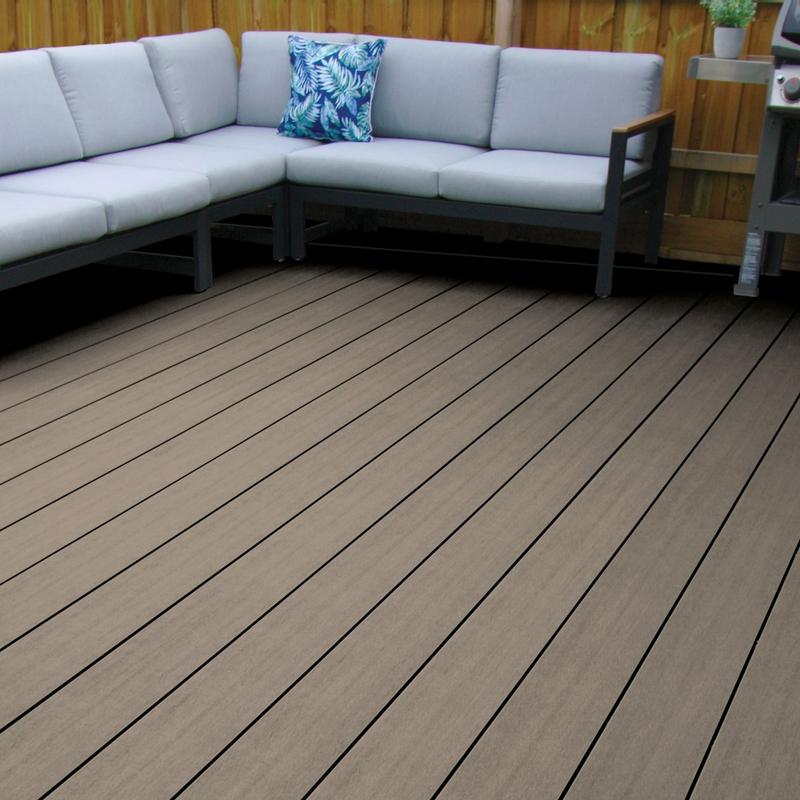
Ready when you are
Build your deck once. Then just enjoy it.
CleverDeck composite decking gives you a natural timber look without the weekend maintenance.